Apple Enters BCI Arena with Synchron, Eyes Thought-Controlled Devices
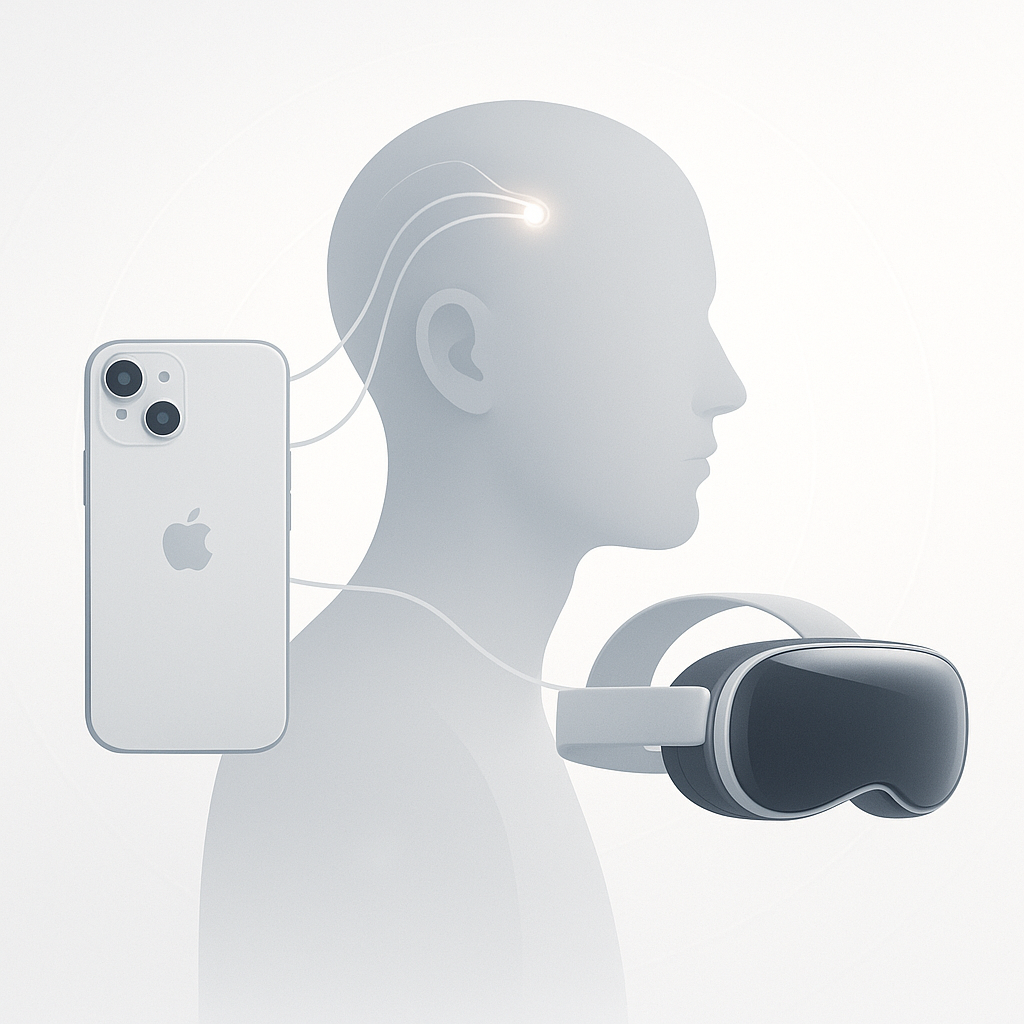
Apple partners with Synchron for thought-controlled devices using BCI tech, aiming to boost accessibility for users with motor impairments.
Apple’s Leap into Neural Control: Revolutionizing Device Interaction with Brain-Computer Interfaces
In a groundbreaking move, Apple has taken a significant step toward enabling users to control their devices—such as iPhones, iPads, and Apple Vision Pro—using only their thoughts. Announced on May 13, 2025, Apple’s collaboration with Synchron, a New York-based brain-computer interface (BCI) startup backed by Jeff Bezos and Bill Gates, marks a pivotal moment in human-device interaction. This development, reported by outlets like The Wall Street Journal and PCMag, introduces a new era of accessibility and innovation, particularly for individuals with motor impairments.
The Technology: Synchron’s Stentrode and Apple’s BCI HID Protocol
At the heart of this innovation is Synchron’s Stentrode, a minimally invasive neural implant inserted via blood vessels, eliminating the need for open brain surgery. Unlike competitors like Neuralink, which drills into the skull to place electrodes directly in brain tissue, Synchron’s approach is less invasive, using a stent-like device placed in a vein above the brain’s motor cortex. This implant captures neural signals and translates them into commands for controlling devices. Since 2019, Synchron has implanted the Stentrode in 10 patients, primarily those with severe paralysis due to conditions like ALS or spinal cord injuries.
Apple has integrated this technology into its ecosystem through a new protocol called BCI HID (Brain-Computer Interface Human Interface Device), which recognizes neural signals as a native input method alongside touch, voice, and typing. This protocol, compatible with iOS, iPadOS, and visionOS, enables hands-free and voice-free interaction through Apple’s Switch Control accessibility feature. Users can navigate menus, select options, or perform actions by thinking, offering unprecedented autonomy for those unable to use traditional inputs. Dr. Tom Oxley, Synchron’s CEO, described this as “a defining moment for human-device interaction,” emphasizing its potential as a next-generation interface layer.
Impact on Accessibility
The primary focus of Apple’s BCI initiative is to empower individuals with motor impairments. Conditions like ALS, stroke, or spinal cord injuries often leave people unable to move or speak, limiting their ability to interact with technology. Synchron’s technology, combined with Apple’s accessibility expertise, allows these users to control devices intuitively. For example, patient Mark Jackson, who tested the system, noted that while navigation is slower compared to Neuralink’s higher-bandwidth implant, it still provides significant independence. Blair Casey, CEO of Team Gleason, an organization supporting ALS patients, praised Apple for “redefining what’s possible for people with disabilities.”
Controlled rollouts for trial participants are set to begin later in 2025, with Synchron preparing for a larger-scale clinical study to further refine the technology. The collaboration aims to make BCI scalable, potentially reaching millions with motor impairments.
Challenges and Limitations
While promising, the technology is still in its early stages. The Stentrode captures limited brain signals, offering basic “switch” functionality rather than complex control, such as manipulating a cursor with the precision of a mouse. This constraint makes tasks like using advanced software challenging. Additionally, full FDA approval for such implants is likely years away, indicating that widespread adoption is not imminent. Privacy and data security also remain critical concerns, as neural signals could potentially reveal sensitive information about a user’s thoughts or intentions. Apple and Synchron are addressing these issues, with Synchron emphasizing ethical development grounded in “Cognitive Liberty.”
The Broader BCI Landscape
Apple’s entry into the BCI market intensifies competition with companies like Neuralink, Paradromics, and Blackrock Neurotech. Neuralink’s N1 implant, which uses more electrodes for higher-resolution data, has been tested in three patients and aims for broader applications, including enhancing human capabilities beyond medical use. However, its invasive approach requires brain surgery, posing higher risks. Synchron’s less invasive method, combined with Apple’s vast user base, could make it a frontrunner in accessibility-focused BCI applications. The BCI market is projected to reach $400 billion, underscoring its transformative potential.
Looking Ahead
Apple’s partnership with Synchron signals a bold step toward mainstreaming neural control technology. While currently focused on accessibility, the technology could eventually expand to broader consumer applications, such as controlling devices through thought for convenience or gaming. Posts on X reflect excitement about this development, with some users speculating about future integrations into Apple’s ecosystem, like augmented reality interfaces for Vision Pro. However, these claims remain speculative and unconfirmed.
As Apple continues to refine this technology, its collaboration with Synchron could redefine human-computer interaction, making devices more inclusive and intuitive. For now, the focus remains on empowering those with disabilities, but the long-term implications could reshape how we all interact with technology. For more details on Apple’s accessibility initiatives, visit apple.com/accessibility.
- Primary Technology Research & Architecture Dispatch TrendingTech Intelligence
Want real-time AI & tech intelligence dispatches?
Join the official TrendingTech Daily Telegram channel for breaking research, model launches, and market analysis.