Trump-Musk Ceasefire: A Fragile Truce in a High-Stakes Feud
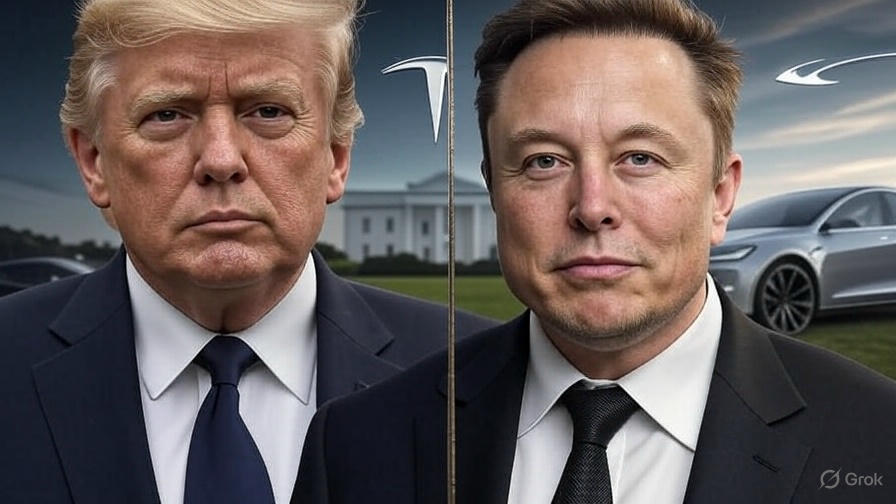
Trump and Musk's explosive feud temporarily ends with a fragile ceasefire after market-rocking attacks. The future of their relationship remains uncertain.
Trump and Musk Ceasefire: A Fragile Truce in a High-Stakes Feud
On June 6, 2025, the explosive public feud between President Donald Trump and billionaire Elon Musk, which captivated the nation with its vitriolic exchanges, showed signs of cooling as both parties signaled a tentative ceasefire. After days of intense social media attacks, personal insults, and threats that rocked financial markets and political alliances, the two titans appear to have stepped back from the brink, prompted by mediation efforts and mutual recognition of the high stakes involved. This article explores the events leading to the ceasefire, the factors that facilitated it, and the uncertain path ahead for their relationship.
The Feud: A Rapid Escalation
The clash between Trump and Musk erupted on June 5, 2025, during a press conference in the Oval Office, where Trump expressed disappointment over Musk’s vocal criticism of the One Big Beautiful Bill, a 1,038-page legislative package central to Trump’s second-term agenda. The bill, which proposes $3.7 trillion in tax cuts and $1.6 trillion in spending reductions, was projected to add $2.4 trillion to the national debt over a decade, according to the Congressional Budget Office. Musk, who until recently co-led the Department of Government Efficiency (DOGE), labeled the bill a “disgusting abomination” on X, arguing it undermined his cost-cutting efforts and would burden the nation with unsustainable debt.
The disagreement quickly escalated into personal attacks. Trump, posting on Truth Social, accused Musk of going “CRAZY” after losing electric vehicle (EV) subsidies, threatening to terminate billions in federal contracts and subsidies for Musk’s companies, Tesla and SpaceX. Musk retaliated with a barrage of nearly 80 posts on X, claiming his $288 million in campaign contributions secured Trump’s 2024 election victory and alleging—without evidence—that Trump’s name appeared in unreleased Jeffrey Epstein documents. Musk even suggested Trump’s impeachment, with Vice President JD Vance as a replacement, and briefly threatened to decommission SpaceX’s Dragon spacecraft, critical for NASA’s International Space Station operations.
The feud’s impact was immediate: Tesla’s stock plummeted 14.3% on June 5, erasing $150 billion in market value, and Musk’s personal net worth dropped by $34 billion, according to the Bloomberg Billionaires Index. Political divisions deepened, with some Republicans siding with Musk’s fiscal conservatism and others rallying behind Trump’s leadership.
The Ceasefire: Signs of De-escalation
By June 6, 2025, both Trump and Musk began to dial back their rhetoric, signaling a fragile truce. Musk took a significant step toward de-escalation by deleting some of his most inflammatory X posts, including those referencing the Epstein files and impeachment calls. He also agreed with a post by investor Bill Ackman urging peace “for the benefit of our great country” and reversed his threat to decommission the Dragon spacecraft, responding to a user’s advice with, “Good advice. Ok, we won’t decommission Dragon.”
Later that evening, Musk posted a conciliatory message on X, wishing Trump well and expressing hope for collaboration on “great things for the country.” Trump, in turn, avoided further public attacks, telling CBS News’ Robert Costa on June 6 that he was focused on domestic and foreign policy, not the feud. A White House official confirmed that no moves were made to oust Musk-aligned staffers, suggesting an intent to avoid further escalation.
External mediation also played a role. Errol Musk, Elon’s father, urged his son to let the feud “fizzle out,” predicting Trump’s political dominance as the elected president. Posts on X, including one from @VnsAnuTi humorously claiming a “BANARASI” mediated the truce, reflected public sentiment for reconciliation. Another post by @Sana_On_X jokingly credited Epstein for the ceasefire, highlighting the absurdity of the feud’s intensity.
A pivotal voice came from Jared Isaacman, Trump’s former NASA pick, who posted on X on June 6: “Any role my nomination played in these fireworks is minor and unimportant compared to what is at stake. What matters is reconciliation between the world’s greatest engineer and the leader of the free world. The country needs it ... the world needs it.” Isaacman’s call for unity resonated, emphasizing the broader implications of the feud for U.S. innovation and governance.
Factors Driving the Ceasefire
Several factors contributed to the de-escalation:
- Economic Fallout: The sharp decline in Tesla’s stock and the threat to SpaceX’s contracts underscored the financial risks for Musk. Investors and shareholders, already concerned about Musk’s divided attention due to his political involvement, pressured him to refocus on Tesla’s upcoming robotaxi launch in Austin, set for the week of June 9, 2025.
- Political Pressure: Trump faced pushback from some Republicans, like Senators Rand Paul and Ron Johnson, who shared Musk’s concerns about the bill’s fiscal impact. With the bill under Senate review and requiring GOP unity, Trump likely recognized the need to avoid alienating Musk’s supporters.
- Mutual Dependency: Despite their rift, Trump and Musk remain intertwined. Musk’s contributions were instrumental in Trump’s 2024 victory, and Trump’s administration relies on SpaceX for critical space missions. Both parties benefit from maintaining a working relationship, even if strained.
- Public and Ally Mediation: Statements from figures like Isaacman and Errol Musk, combined with social media calls for peace, created external pressure for reconciliation. The humorous tone of some X posts, like the mock “Hamas ceasefire” headline, highlighted the public’s desire for resolution.
The Road Ahead: An Uncertain Truce
While the ceasefire has paused the public war of words, the Trump-Musk relationship remains fragile. Trump told NBC News on June 7 that he believed their relationship was “done” and warned of “serious consequences” if Musk backed Democratic candidates against GOP supporters of the bill. Musk, while stepping back from direct attacks, continued to muse about forming a new political party to represent “the 80% in the middle,” suggesting lingering discontent.
On June 11, 2025, Musk posted on X, expressing regret for some of his posts about Trump, stating, “They went too far.” This apology, though vague, indicates a willingness to further de-escalate, but it stops short of fully retracting his criticisms. Trump, meanwhile, has signaled no immediate plans to reconcile, telling Reuters on June 6 that he was “not thinking about” Musk and focusing instead on trade talks with China. Reports suggest Trump is considering selling the red Tesla Model S he purchased in March 2025 as a show of support for Musk, a symbolic gesture of their fractured alliance.
The One Big Beautiful Bill remains a sticking point. With the Senate set to review it before July 4, Musk’s opposition could still influence conservative lawmakers, potentially delaying or altering the legislation. The bill’s proposed elimination of EV tax credits continues to threaten Tesla’s growth, while SpaceX’s government contracts hang in the balance.
Broader Implications
The Trump-Musk feud and subsequent ceasefire highlight deeper tensions within the Republican Party and the tech industry. Musk’s push for technocratic reform clashes with the populist MAGA agenda, exposing ideological divides. The feud has also raised questions about Musk’s influence in Washington, with some tech billionaires who followed his lead now reassessing their alignment with Trump.
Public sentiment on X reflects a mix of amusement and concern. Posts like @patriot33920’s on June 6 noted signs of détente, while @JohnMacIntyre2 on June 9 predicted the truce wouldn’t last, suggesting ongoing volatility. The economic stakes are significant, with Tesla’s recovery and SpaceX’s NASA contracts critical for both Musk’s empire and U.S. innovation.
Conclusion
The ceasefire between Donald Trump and Elon Musk, signaled on June 6, 2025, marks a pause in one of the most dramatic public feuds in recent political history. Driven by economic pressures, political realities, and calls for reconciliation, the truce reflects a mutual recognition of their intertwined fates. However, with unresolved tensions over policy, personal egos, and high-stakes business interests, the path to full reconciliation remains uncertain. As Musk refocuses on Tesla and SpaceX, and Trump pushes his legislative agenda, the nation watches to see whether this détente holds or if the clash of titans reignites.
- Primary Technology Research & Architecture Dispatch TrendingTech Intelligence
Want real-time AI & tech intelligence dispatches?
Join the official TrendingTech Daily Telegram channel for breaking research, model launches, and market analysis.