Tesla Optimus Gen 3: A Giant Leap for Humanoid Robots?
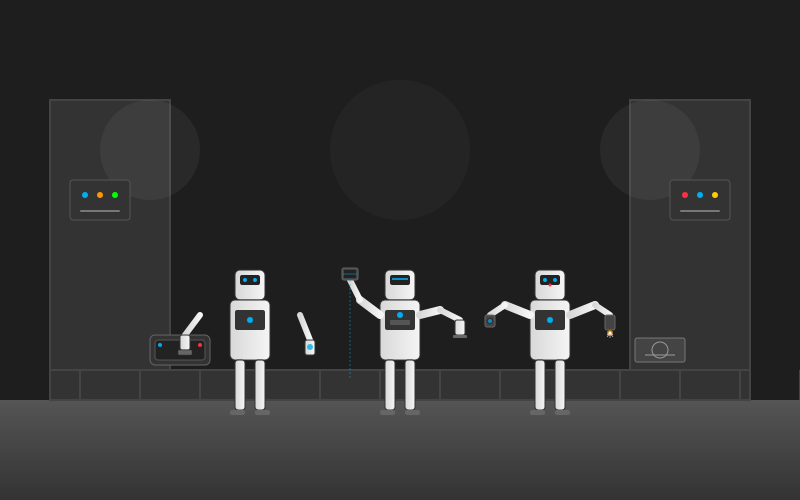
Tesla's Optimus Gen 3 boasts impressive dexterity and autonomy, but concerns remain about reliability, ethical implications, and accessibility.
Tesla's groundbreaking Optimus Gen 3 humanoid robot represents a paradigm shift in the field of robotics, marking a significant and substantial advancement beyond its predecessors and outperforming all existing comparable robotic systems. This third-generation model exhibits an unprecedented level of fluidity and precision in its movements, showcasing a remarkable enhancement in dexterity, significantly improved object manipulation capabilities, and a vastly superior capacity for seamless interaction with human counterparts. The degree of autonomy demonstrated by Optimus Gen 3 is unparalleled in humanoid robotics, setting a new benchmark for operational independence in this rapidly evolving technological landscape.

Recent public demonstrations have vividly illustrated Optimus Gen 3's remarkable proficiency in navigating intricate and realistic environments, adeptly manipulating objects with exceptional accuracy and demonstrating an impressive ability to adapt to unforeseen circumstances and challenges without requiring extensive pre-programmed instructions or prior training. The robot's innovative "knee bend" locomotion design is not merely a stylistic feature; it's a carefully considered engineering solution that greatly enhances stability and showcases the advanced design and meticulous precision engineering incorporated into its sophisticated locomotion system. This innovative system facilitates a more natural, human-like gait and contributes to a substantial improvement in overall balance and postural control.
The exceptional progress achieved with Optimus Gen 3 strongly suggests that we are witnessing a pivotal juncture in the ongoing evolution of humanoid robotics, signifying a moment of transformative potential. While further research and development are undoubtedly necessary to fully unlock its potential and address remaining challenges, the impressive advancements already demonstrated clearly point towards a future where robots are seamlessly integrated into numerous aspects of human life across a diverse range of sectors. From high-volume manufacturing and industrial automation to intricate tasks in the healthcare sector and the provision of personalized assistance, the possibilities are vast and far-reaching. However, it is critically important that we engage in proactive and comprehensive consideration of the inherent ethical implications and potential societal ramifications associated with the continued development and widespread deployment of this revolutionary technology.
A responsible and ethically sound approach to the development and application of Optimus Gen 3, and similar technologies, is paramount to ensure that the benefits are maximized while simultaneously mitigating and minimizing potential risks and unintended consequences for individuals and society at large. This necessitates a concerted effort involving researchers, policymakers, and the public to ensure the beneficial integration of this technology into the future.
- Primary Technology Research & Architecture Dispatch TrendingTech Intelligence
Want real-time AI & tech intelligence dispatches?
Join the official TrendingTech Daily Telegram channel for breaking research, model launches, and market analysis.