Global Economy Navigates Tariff Truces, Growth Uncertainties
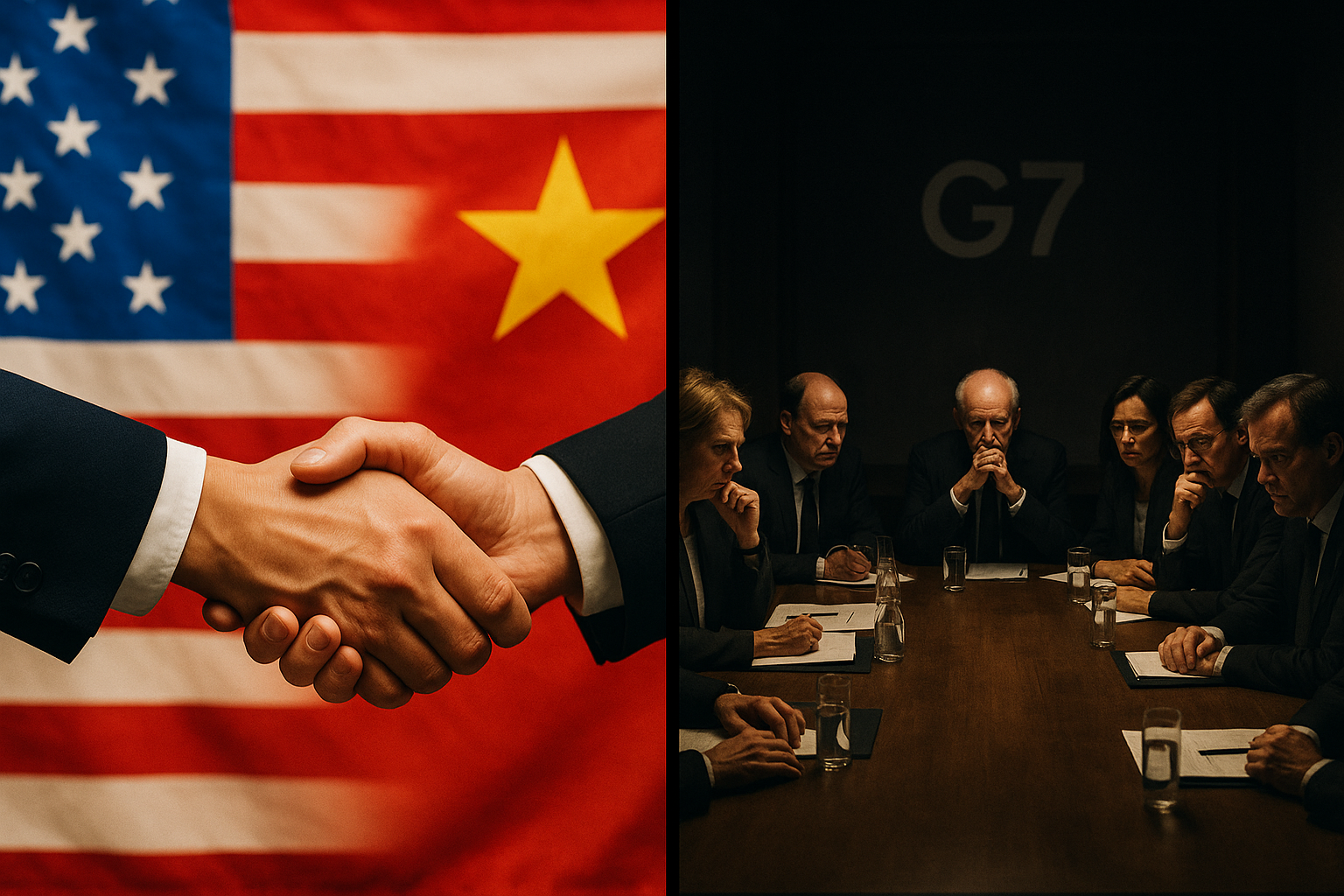
Late May 2025 sees a fragile U.S.-China tariff truce offering temporary market relief, while G7 talks and Japan's struggles highlight ongoing global economic volatility.
Global Economic News Roundup: Late May 2025
The last week of May 2025 has been marked by significant economic developments worldwide, driven by trade policies, tariff negotiations, and shifting growth forecasts. From U.S.-China trade truces to G7 discussions and Japan’s economic challenges, here’s a look at the most notable economic stories shaping the global landscape.
U.S.-China Tariff Truce Sparks Optimism
A major highlight this week was the 90-day tariff truce between the United States and China, agreed upon during trade talks in Switzerland. The U.S. reduced tariffs on Chinese imports from 145% to 30%, while China cut duties on U.S. imports from 125% to 10%. This temporary de-escalation, announced on May 12, led to a nearly 3% surge in the S&P 500, reflecting market relief. Economists from Goldman Sachs, JPMorgan, and Bloomberg Economics upgraded China’s 2025 growth forecast to at least 4.6% from a previous low of 4%, while U.S. recession fears eased slightly. However, China’s state-backed Global Times called the 90-day window “too short,” urging a longer-term agreement to stabilize global trade. Despite the truce, uncertainties persist, with ongoing talks in South Korea yielding no further details.
G7 Addresses Global Imbalances Amid Tariff Tensions
The G7 finance ministers’ meeting in Banff, Alberta, on May 22 focused on addressing “excessive imbalances” in the global economy, a veiled reference to China’s state subsidies and export-driven model. The group avoided directly addressing U.S. President Donald Trump’s tariffs, which have disrupted global supply chains and heightened economic uncertainty. German Finance Minister Lars Klingbeil emphasized the need to resolve trade disputes swiftly, noting that tariffs are “endangering the American economy at least as much as the German and European economies.” Canadian Finance Minister François-Philippe Champagne highlighted the G7’s unity in tackling non-market practices, but U.S. Treasury Secretary Scott Bessent’s low-profile presence underscored ongoing tensions. The G7’s pledge to increase sanctions on Russia further complicated the global economic outlook.
Japan’s Economy Faces Tariff and Debt Challenges
Japan’s government downgraded its global economic outlook on May 22, citing uncertainties from U.S. tariffs. The country’s economy contracted by an annualized 0.7% in the first quarter of 2025, marking its first decline in a year, driven by weak exports and consumption. Prime Minister Shigeru Ishiba warned that Japan’s debt situation is “worse than Greece,” signaling vulnerability to market shocks. Finance Minister Katsunobu Kato highlighted risks of rising interest rates and a weak yen if market confidence wanes. The Bank of Japan, having raised rates to 0.5% in January, cut growth forecasts due to tariff-related pressures, raising doubts about further rate hikes. Analysts warn that without a stimulus package, Japan’s recovery could stall further.
China’s Rate Cuts to Counter Trade War Impact
On May 20, China cut benchmark lending rates for the first time since October, alongside reductions in deposit rates by major state banks, to cushion the economy against U.S. trade pressures. The People’s Bank of China (PBOC) implemented these measures as part of a broader stimulus package to meet the country’s 5% growth target. However, Nomura’s chief China economist, Ting Lu, noted that achieving this target remains challenging without significant stimulus, given patchy economic growth. The rate cuts reflect cautious monetary easing, balancing growth needs with commercial lenders’ shrinking profit margins. Global investment banks raised China’s growth forecasts post-truce, but analysts warn of persistent risks if trade tensions reignite.
U.S. Economic Outlook Remains Mixed
Despite the U.S.-China tariff truce, a Reuters poll on May 21 indicated a weak U.S. economic outlook, with inflation expected to exceed the Federal Reserve’s 2% target until at least 2027. Economists cited persistent inflation and fiscal health concerns, with no clear consensus on interest rates by year-end. The University of Michigan’s consumer sentiment survey reflected fears of stagflation, driven by tariff-induced price hikes, potentially curbing consumer spending. Retail sales in April rose by a modest 0.1% month-on-month, beating expectations, but unemployment claims reached 229,000, signaling labor market strain. Markets reacted positively to the tariff truce, with the Nasdaq gaining 7% in one of its best weeks recently.
Europe and UK Navigate Trade and Growth
In Europe, concerns over U.S. tariffs dominated economic discussions. German officials warned of the heavy burden on global growth, while the UK, under Chancellor Rachel Reeves, announced plans for a trade pact with Gulf countries to boost economic growth. Despite a strong first-quarter performance, the UK’s growth is expected to slow due to tariff impacts. The EU faced criticism from U.S. Treasury Secretary Scott Bessent for its “collective action problem” in trade negotiations, complicating efforts for a swift agreement. These dynamics highlight the broader challenge of maintaining economic stability amid global trade disruptions.
Conclusion
The global economy in late May 2025 is at a crossroads, with the U.S.-China tariff truce offering temporary relief but no long-term resolution. Japan’s economic struggles, G7 efforts to counter non-market practices, and China’s cautious stimulus measures reflect a complex landscape. While markets have responded positively to de-escalation efforts, persistent uncertainties around trade policies and inflation continue to challenge global growth. As negotiations progress, the coming months will be critical in determining whether these developments lead to stability or further volatility.
- Primary Technology Research & Architecture Dispatch TrendingTech Intelligence
Want real-time AI & tech intelligence dispatches?
Join the official TrendingTech Daily Telegram channel for breaking research, model launches, and market analysis.